
Grim Reaper Consulting
Your company is running more projects than anyone can steer.
AI made starting things cheap. Your attention didn't grow. I find the projects that are already dead, get them stopped, and give their people back to the work that matters.
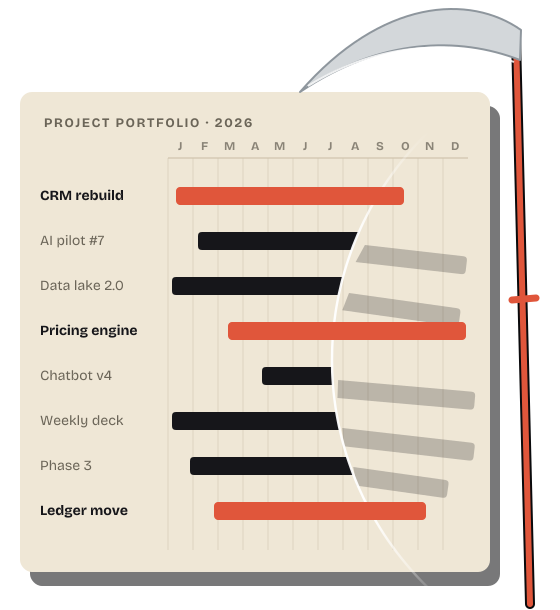
What changed between 2024 and 2026
- 6% → 2%
- headcount growth CFOs planned for 2025, then for 2026, while tech budgets rise (Gartner)
- 42%
- of companies abandoned most of their AI initiatives in 2025, up from 17% a year before (S&P Global)
- 12.1
- people report to the average manager, up from 10.9 a year earlier (Gallup)
- 2028
- the year Gartner expects AI coding costs to pass the average developer's salary
Why there are more projects than anyone can steer
Count the projects running in your company right now. Then count the ones you could explain in two sentences: what each is for, who owns it, and when it ends. If the second number is much smaller, you are not alone. In an Atlassian survey of 8,000 office workers, 44% said they started 2026 carrying zombie projects, work that hasn't moved in weeks and has no clear owner.
Three things changed at the same time.
- AI made starting things cheapAn analysis, a proposal or a prototype now takes an afternoon. Each one still needs someone to read it and say yes or no, and every yes becomes a project.
- Nobody got more hoursBudgets grew, and the new money went to AI. Planned headcount growth fell to 2%. Managers carry bigger teams, and their week is the same length.
- Every hour got more expensivePeople now come with a token bill on top of their salary. A project nobody is steering burns both.
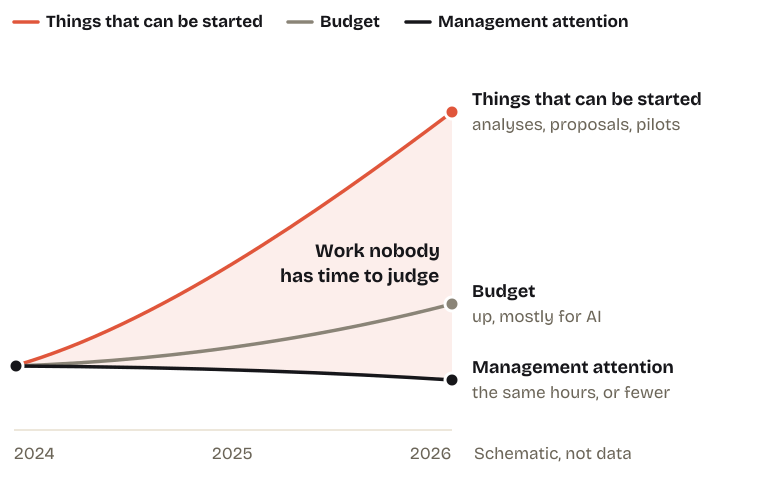
Schematic, not data. The sources behind each line are in the case for killing projects.
What dies
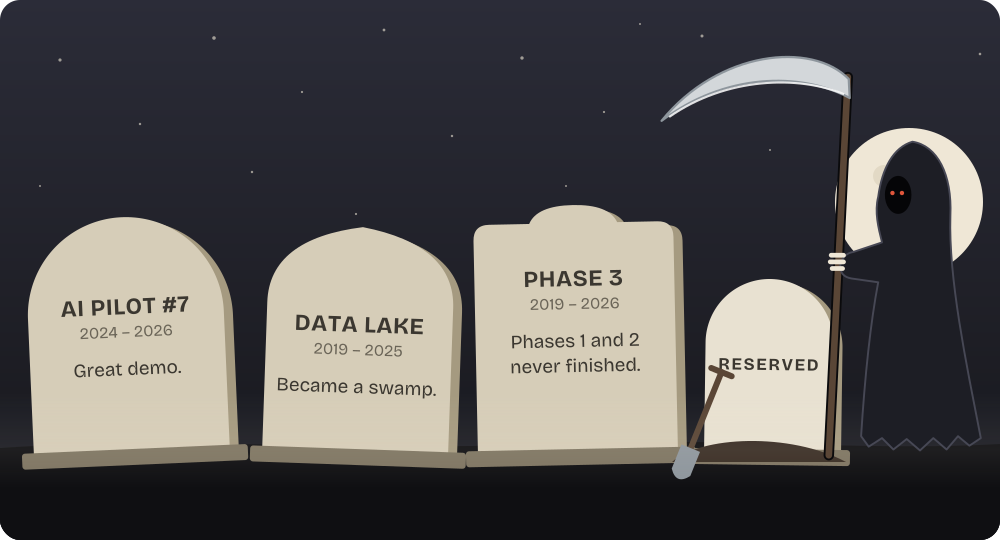
Every company's list is different. These are the kinds of project the Inquest looks for first:
- Pilots with no way into productionThe demo worked. Nobody owns the system it was meant to change.
- Programmes on their third phaseThe goal has moved twice since the budget was set, and the budget hasn't.
- Reports nobody readsSomeone still builds them every week. AI made them quicker to write than to read.
- Projects whose sponsor has leftThey keep running because nobody left in the room can stop them.
- Two teams building the same thingNeither knows about the other until both are on one list.
- Anything kept alive because of what it already costThat money is gone either way. The only question is what next month costs.
What doesn't die
People. Projects stop so the people in them can work on something better. Every kill on the list says where its people go next, and a kill isn't finished until that's settled.
The projects that survive get the people, money and attention the dead ones were eating. That's the point of the whole exercise: twelve projects with people on them get further than forty waiting for a meeting.
How the Inquest works
Two weeks, a fixed fee, and it ends with decisions, not a report.
- The list. Every running project, with its owner, its budget, its people, its token bill if anyone knows it, and the last real decision anyone made about it.
- The inquest. I talk to the owners and to the people doing the work. Every project gets the same three questions: would you start this today, what has to be true for it to pay back and by when, and who would notice if it stopped?
- The kill list. Each project is marked keep, kill, or keep with a kill date: if it hasn't reached a stated point by a stated date, it stops. Every kill comes with its evidence and with where its people go.
- The decision session. Two hours with your leadership team. Most decisions get made in the room. Every project that dies leaves with a stop date and a named person who ends it.
€8,000, fixed, excluding VAT. To book an Inquest, message me on LinkedIn.
Why it takes an outsider
Bad projects are hard to kill from the inside. Isabelle Royer studied two of them for Harvard Business Review in 2003 and found the trouble wasn't missing data. It was belief: everyone involved was sure the project would come good, so every bad sign looked like a temporary setback. Her fix was to give someone the job of making the case for stopping. She called that person an exit champion.
Inside a company, that job has a price. In the same Atlassian survey, more than one in three people said they were afraid of how it would look to pull the plug. I don't pay that price. I'm not attached to any of your projects, and the Inquest doesn't end with a pitch for the next one. If someone has to be the bad guy, it can be me.
Who does the killing
I'm kdaniel. I've spent the last decade helping organisations with strategy, and I build software with AI every day, so I see the token bill from the inside. Grim Reaper Consulting is the part of that work where something has to stop.
Message me on LinkedIn · The case for killing projects · About